Showing posts with label stanpit marsh. Show all posts

Sunday, 4 January 2015

Week 38 04-01-2015 Birds Spotted: 2

We start off the New Year with a bang in the form of two new birds. They're really record shots due to the long distances and generally poor light, but I'm pleased I made the effort to get out to Blashford Lakes today.

Black-Necked Grebe
I've gone to both Longham and Blashford several times and have always missed this bird. Now I know why, it's extremely small, and not that much bigger than a Little Grebe. For some reason I always thought it was Great Crested Grebe size.
This one was kindly pointed out to me by a nearby gentlemen who was intently studying all the gulls on the lake. While I was able to get a decent viewing through my binoculars, the following shot is for record purposes only :)
Only 130 birds winter in the UK, making them relatively rare. They're a lot more noticeable in Summer, due to their bright plumage, but outside of breeding their quite dull, save for their bright red eyes. They feed on a variety of foods, from small fishes to crustaceans and will also take insects. This one was continually diving, making him quite a challenge to spot.

Not the greatest shot, but the white cheek patch is very recognisable.

Green Sandpiper
About 10 minutes before we were due to leave the Goosander hide, we heard a high pitch piping that I initially mistook for a Kingfisher. It was actually a Green Sandpiper, which was being chased by a Sparrowhawk. The raptor quickly gave up on the bird though, leaving it to perch down on a stand about 60 feet from us. The light was failing, so it's not the best of shots, but is more than recognisable.
It looks quite similar to the Wood Sandpiper, but it lacks the conspicuous strip that runs from the eye to the back of the neck. The Green Sandpiper rarely breeds in the UK, but up to 1,000 birds winter here each year. It's on the amber list and is typically seen in the UK between July and March.
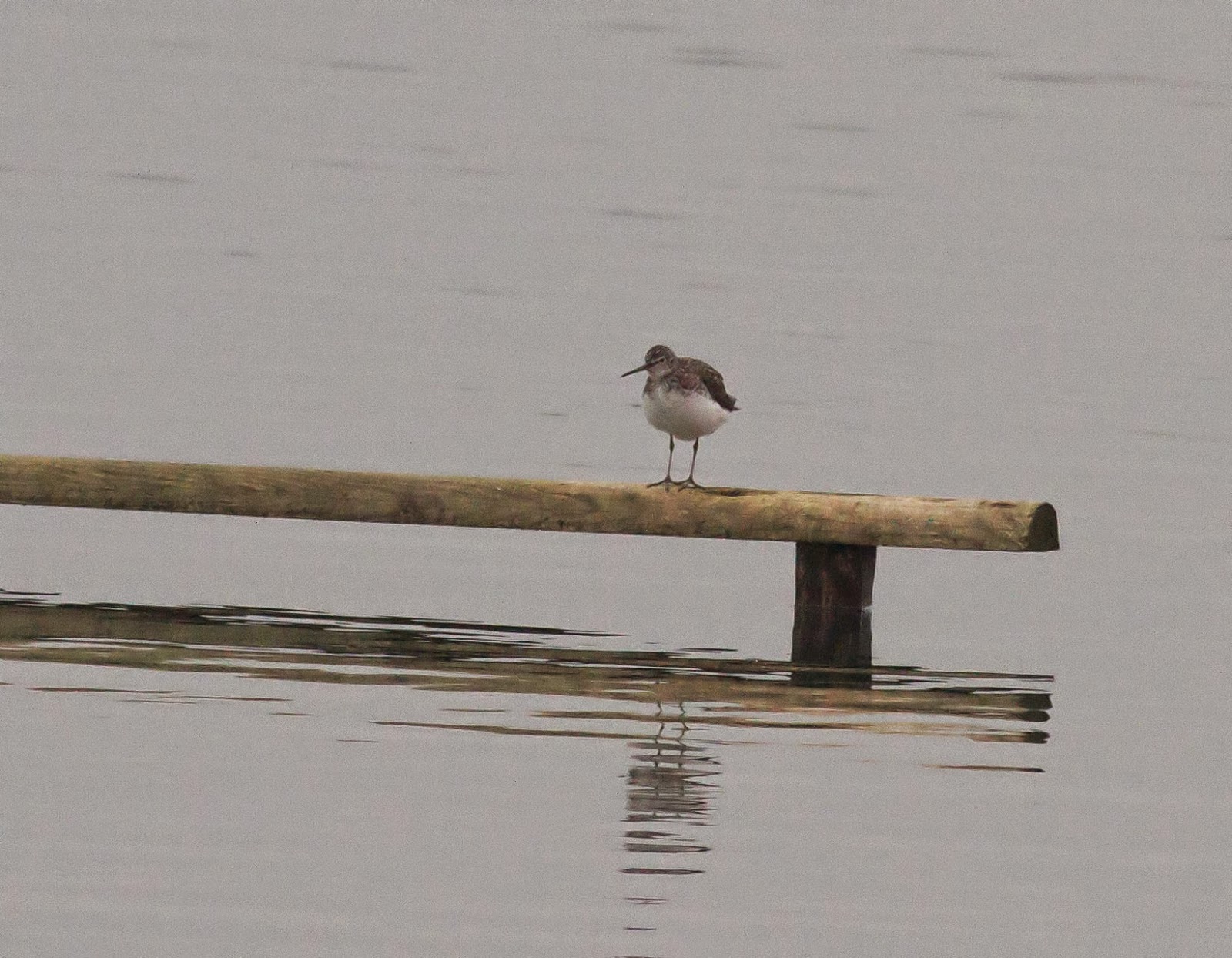
Here's the Green Sandpiper, minding its own business.


And here's a harsher shot of it. Sadly the light was fading badly.

All in all it's been a good start to the year and I'm now at 129 photographed birds with 143 left to find.

I'll finish off with a selection of shots from both Blashford and Stanpit Marsh.

Wigeon on the lake at Ivy Hide south.

Roosting Cormorants.

The Goosanders continue to stay distant.

Female Blackbird taken through glass at the Woodland hide.

Blue Tit.

Make Chaffinch.

Female Chaffinch.
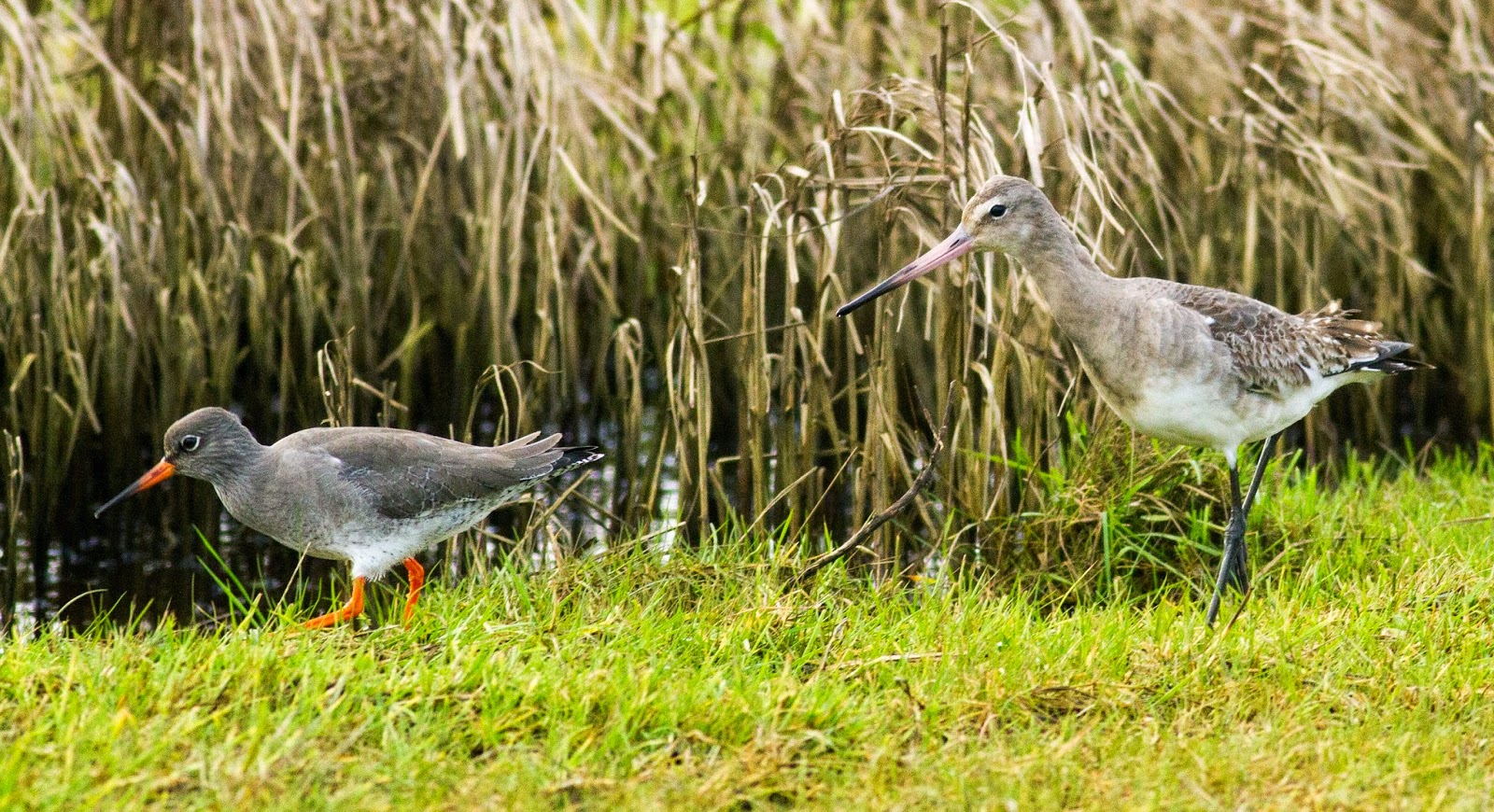
Redshank and Black-Tailed Godwit at Stanpit.

Curlew going for a walk.

Green Woodpecker, taking a break from eating ants.

Little Egret flyby.

Rock Pipit.

Redshank and Starling.

Stonechat.

Sunday, 26 October 2014

Week 28 26-10-2014 Birds Spotted: 1

Sorry for no update last week but I'm being hit by the harsh reality of the British weather.

One thing I've noticed about creating a blog around bird photography is that you need half decent light in order to stand any chance of getting a half-decent shot. With the weather being largely terrible for the past couple of weeks, I've had less and less opportunities to get out. And once' I'm out the light has generally been so poor I've been forced to use higher iso levels that I'd typically be happy with.

Still I did manage to get one new bird in the past two weeks of general pain and suffering, so let's take a look at it.

Dartford Warbler
I've had so many near misses with this elusive little bird. Every time I've been to Arne, I've heard them, but never been quick enough to get a photo of them. A quick tail flash is all I've normally seen, and I was giving up hope of getting a half decent shot as the weather turn.
Still a visit to Arne on Saturday saw my luck was in and the distinctive churring alerted me to the nearby warbler. I was able to get a good 20 feet towards him (or her) and it showed no signs of being scared. In fact it hung around for a good 3 minutes and only flew off when a young family came close.
This gorgeous bird is only found in a few locations in the UK and Dorset is one of its hotspots. Noted for its long tail, buff breast and red eye markings, it's a very distinctive warbler that has a distinctive churring call. It's very rare due to its limited habitat and there's thought to be just over 3,000 breeding pairs.

This is the closest I could get, around 20 feet away, which shows just how small it is!

And here's a crop of the little fellow.

So that's it for birds this week. I'm now up to 120 photographed birds with another 152 left to find.

Spotted what I suspect is a Meadow Pipit.

A fuzzy Long-Tailed Tit in flight.

A Mistle Thrush. As noted earlier, the day was overcast for the most part :(

A selection of geese and waders at Middlebere.

I also went to Stanpit late Sunday afternoon, but the light was even worse, which made for some pretty disappointing shots.

A group of Brent Geese.

Another that refused to pose for me :)

A group of Lapwings.

Lapwings in flight.

The back of a Redshank.

And a Cormorant.

Sunday, 28 September 2014

Week 24 28-09-2014 Birds Spotted: 5


It was a pretty good week of birding as I visited a new location called Stanpit Marsh. It's located on the far side of Hengistbury Head and has plenty of interesting waders and water birds. I set off with my friend Mark and was soon adding plenty of new birds to my life list.
One word of warning though. It wasn't a great day and the general distance of the birds mean that many of the following are record shots only.

Yellow Wagtail
While I've already seen one thanks to Mark's keen ears on a previous trip, this was the first time I was able to get a decent photo opportunity. Currently on the RSPB's Red List, the Yellow Wagtail is down to around 15,000 breeding pairs. It's a gorgeous looking bird, often mistaken for the similar Grey Wagtail, which has a grey back and head. This one was foraging around a horse, picking at the ground that the larger animal was disrupting with its hooves. It was soon joined by a second and ended up flying back and forth for the duration of our stay.
Note it lacks the black bib of the Grey Wagtail.

Another shot, a little too over processed.

And a distant shot of the pair together.

Pintail
Another record shot, but I can assure you this is a Pintail duck. We saw two, both accompanying Mallards. It's easily our most elegant duck, with a long neck and streamline body. It's also gorgeous to look at with distinctive patterns, while the Male has an extremely long tail.
It's a quarry bird, meaning it can be legally shot for sport during the winter. According to the RSPB, this isn't affecting its status in the UK, but it remains on the amber list with breeding pairs being less than 40. It's largely a wintering duck in the UK, with up to 29,000 birds arriving each year. It''s distribution is patchy, with it rarely being found in central England.
It's a lovely looking bird and my shots really don't do it justice.
Although larger, it's much less stocky than a Mallard.

And here it is again.

Knot
Although I was mainly on my bins for our stay at Stanpit it was Mark who spotted this pair of waders. Knot are extremely similar in size and colouration to Dunlin, but are far daintier with smaller bills. Although over 320,000 birds winter here each year it's still on the amber status.
I find telling waders apart extremely difficult, so if it wasn't for Mark's observations I would have put these down as Dunlin and lost a bird off my list.
Apologies for the image clarity but this is a 100% crop. Note the Oystercatchers and Redshank for size comparison purposes.


Brent Goose
There are apparently two types of Brent Geese that winter in the UK, light bellied and dark bellied variants. It's a relatively small goose, roughly the same size of a Mallard and it's mainly coastal. It doesn't breed in the UK and departs for warmer territories by March. Interestingly, these are pretty early as they're typically not seen until October. 

A 100% crop of some feeding Geese, there were probably around 30 in total.

More Brent Geese.

Peregrine Falcon
We were just heading off when all the birds became agitated and started to move. Mark was hoping for an Osprey, but I was more than happy when a Peregrine Falcon appeared and started chasing after Stock Doves. It's a truly beautiful raptor and incredibly graceful in flight. It's one of the world's fasted animals, with a stoop that reaches speeds of up to 242 miles per hour. Immediately noticeable due to its big pointed wings, spotted breast and black moustache, it's a magnificent looking creature that continued to put the birds on edge for several minutes. It was eventually seen off by Carrion Crows, leaving behind a lot of flustered birds and one very happy photographer.

Another 100% crop. Look how stunning it is.

I could watch these all day.

And then the crows ruined it.

So that's it for another week. I'm now up to 119 photographed birds, with 153 left to spot. Here's hoping the weather improves in the coming weeks!

You could get surprisingly close to the Egrets.

Although these ones were quite a way off.

Mute Swan having a preen.

An inquisitive Wheatear.

A resting Cormorant.

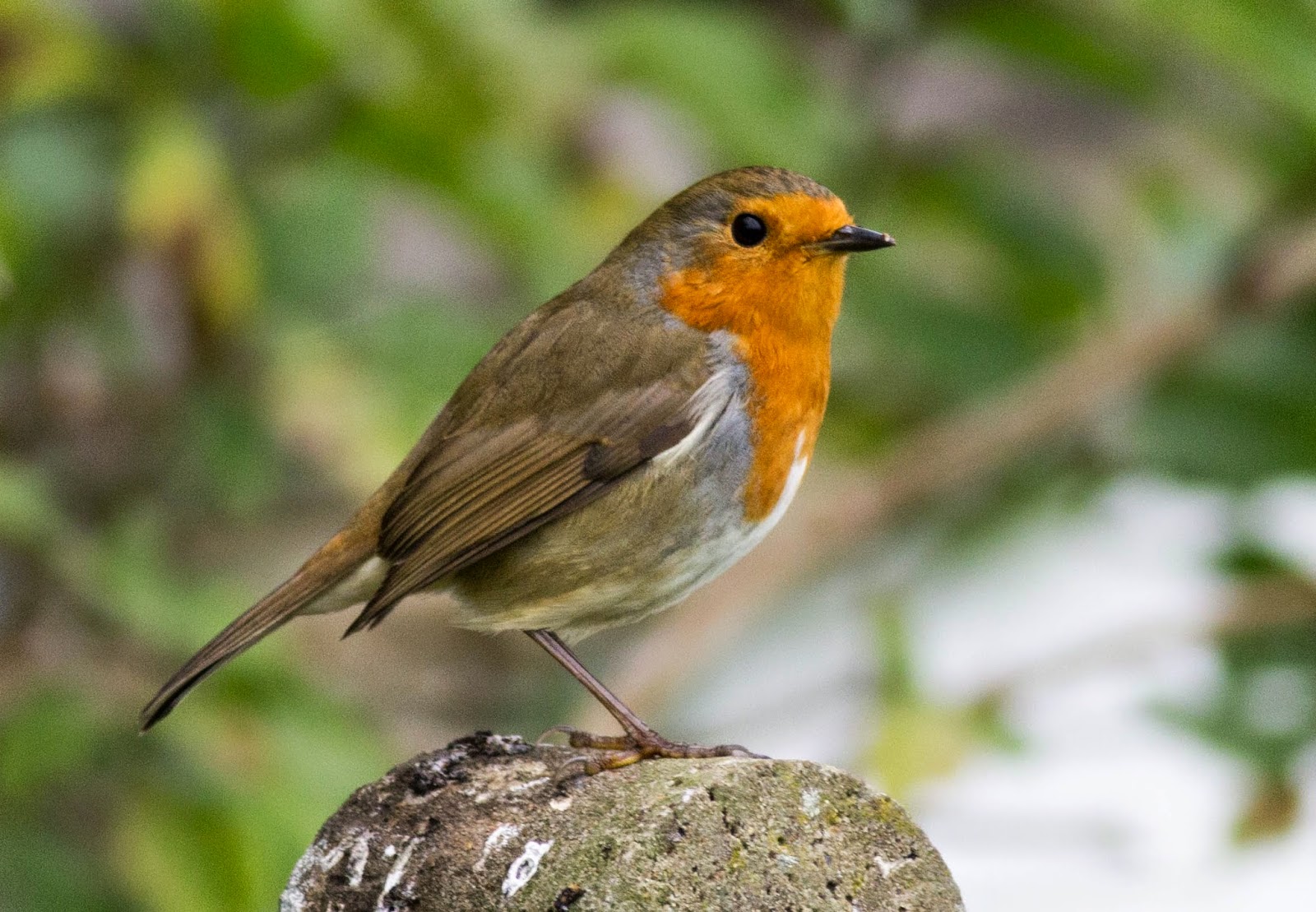
A posing Robin.

And another.

More Little Egret action.

A poor shot of a Swallow.

A cold House Sparrow.